

Your servers sit in Rotterdam.
We host what we build. Not because we have to, but because pulling building and running apart is exactly why nobody picks up the phone during an outage. Now there is one party that knows what is running and can actually reach it.
The machines live at SmartDC in Rotterdam, with a failover at a second location. Networking and connectivity we do together with 4All Business Telecom. Your data stays in the Netherlands and you could drive past it.
Where it sits and who touches it.
Not resold space at a company you never speak to. We know which rack it hangs in and who holds the key.
-
SmartDC Rotterdam
A top-tier data centre with dual power, its own cooling and access control. It is half an hour from us, so when something needs a person on site, a person is there.
-
Failover at a second location
Back-ups and copies do not sit in the same building as the machines. If something goes seriously wrong at one location, the other is still there. That is the scenario nobody wants to think about, which is why you arrange it beforehand.
-
Together with 4All Business Telecom
We do the network and connectivity with them, because that is their trade and not ours. That way there is someone on that side too whom you know by name instead of a fault number.
-
Managed by us
We set the servers up, keep them current and watch them. No middle party saying it is the hosting while the hosting says it is the software. With us that is the same phone number.
Why it matters where your data sits.
This is not flag waving. There are practical reasons behind it, and the second one surprises most people.
-
The American CLOUD Act
American providers are obliged to hand data to their government on request, even when that data physically sits in Europe. For most companies that is not a daily problem, but it is something to know before you put your customer data somewhere.
-
A back-up nobody ever restored
Large platforms promise availability, not recovery. Lose data through a staff mistake or ransomware and many terms make that explicitly your problem. So we restore a back-up for real from time to time, because a back-up you never tried is an assumption.
-
Someone you can call
During an outage you do not want to fill in a form and wait three days for an answer in English. You want to speak to someone who knows which platform is yours, what was released last week and the quickest way back.
-
Costs that do not suddenly double
On the big clouds you pay per component used, and it climbs without anyone noticing. We work with a fixed monthly amount for what you need. If you grow fast we scale with you and say in advance what that will cost.
How we move what runs today.
A migration should not be an evening full of tension. We put everything side by side first and only switch once it works.
Book a call-
We map what is there
Which servers, which domains, which certificates and which connections come in from outside. That last one gets forgotten, and it is exactly what breaks after a migration.
-
Everything goes up beside the existing setup
We build the new environment and put a copy of your data in it. We test on that, with your people involved, while the old environment simply keeps running.
-
Outside office hours, in minutes
On an agreed evening we move the last data across and point the traffic over. If anything does not go as intended, we are back on the old environment within minutes.
-
We keep watching
Monitoring on availability, disk space, speed and certificates. If something heads towards the edge, we hear about it and fix it before you notice.
Platforms that run with us and keep running.
Software we did not only build, but whose servers we also manage.
All cases-
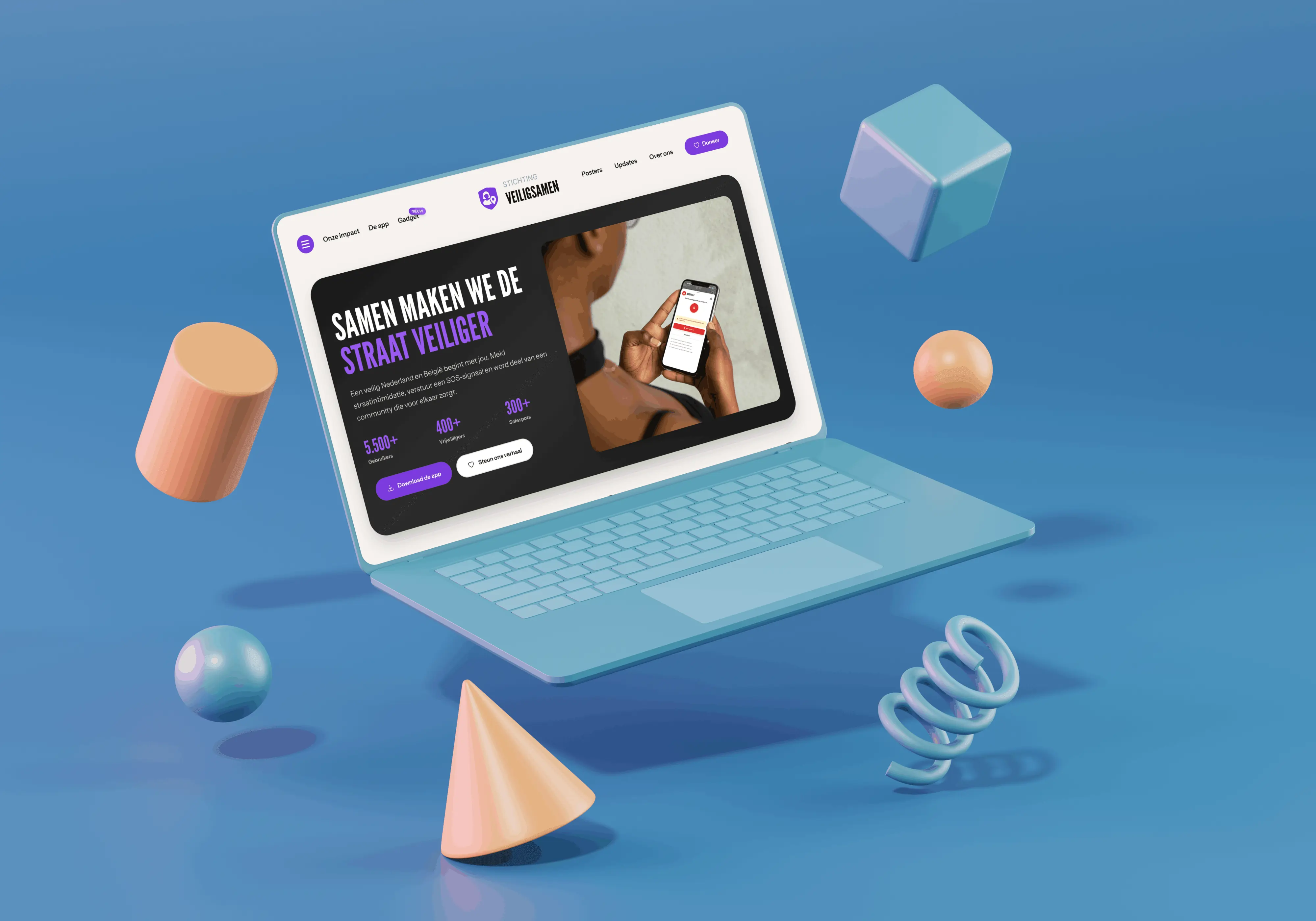 De app en de API waarmee een SOS binnen seconden bij vrijwilligers in de buurt ligt.
Een SOS die binnen seconden op de telefoon staat van vrijwilligers een paar straten verderop.
De app en de API waarmee een SOS binnen seconden bij vrijwilligers in de buurt ligt.
Een SOS die binnen seconden op de telefoon staat van vrijwilligers een paar straten verderop.
-
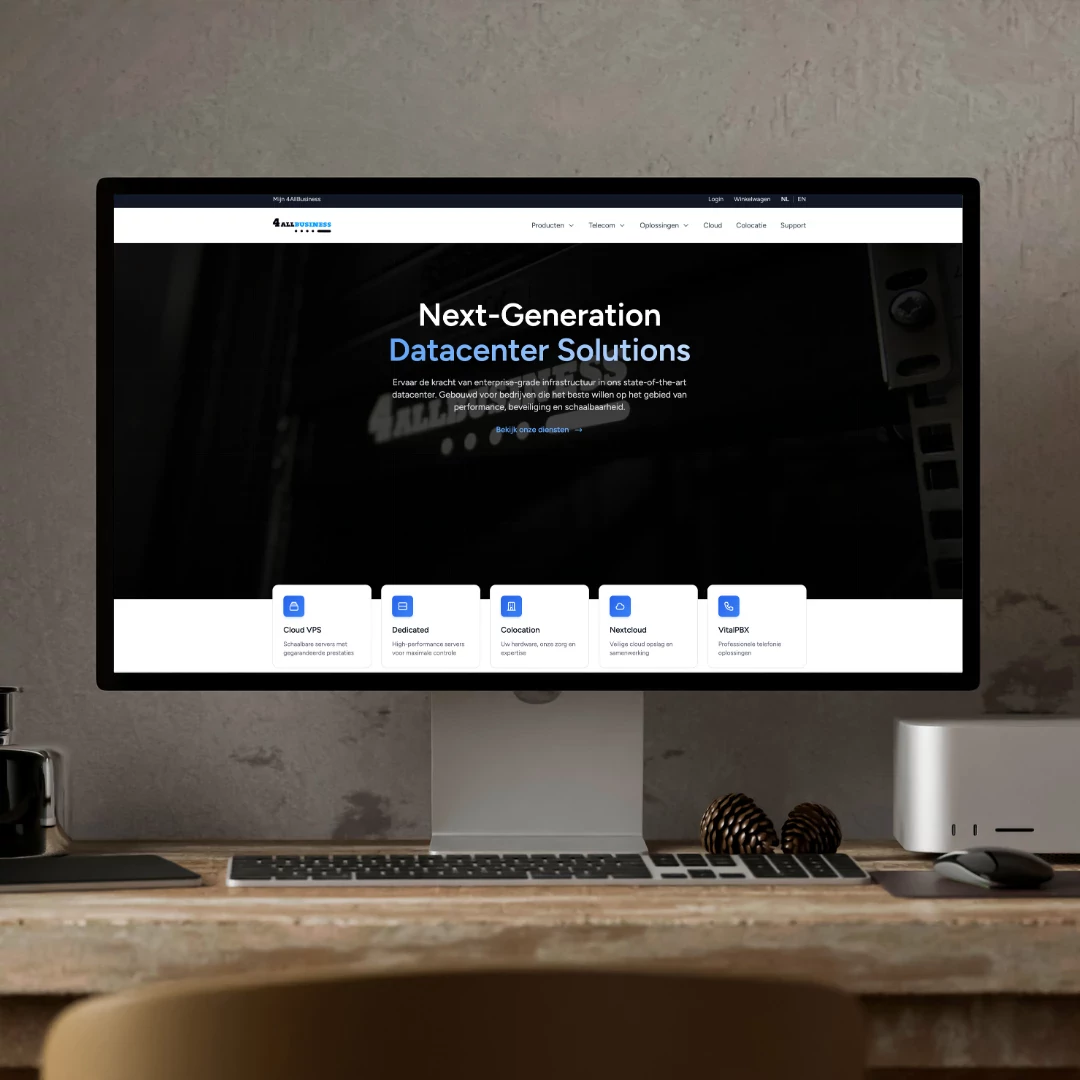 De vernieuwde site met een configurator waarin klanten hun eigen pakket samenstellen en meteen bestellen.
Bestellingen die binnenkomen zoals de klant ze zelf heeft samengesteld, klaar om te verwerken.
De vernieuwde site met een configurator waarin klanten hun eigen pakket samenstellen en meteen bestellen.
Bestellingen die binnenkomen zoals de klant ze zelf heeft samengesteld, klaar om te verwerken.
-
 De app die hun magazijnsysteem en Shopify aan elkaar knoopt, te installeren vanuit de App Store.
Voorraad die in het magazijn afgaat en op hetzelfde moment in de webshop klopt.
De app die hun magazijnsysteem en Shopify aan elkaar knoopt, te installeren vanuit de App Store.
Voorraad die in het magazijn afgaat en op hetzelfde moment in de webshop klopt.
Helped us extremely fast and understood right away what was needed. I know who I am calling next time.
Questions about hosting.
Not answered here? Just ask. You get someone who can reach the servers.
Ask your questionDo we have to host with you if you build something?
No. It does work best in practice, because then there is no argument about whose turn it is during an outage. If you want to stay with your own party or run in your own data centre, we put it there and write down how it should be managed.
What does hosting cost per month?
It depends on what has to run and how heavily it is used. You get a fixed monthly amount for the environment you need, including updates, monitoring and back-ups. If it outgrows itself, we say in advance what the next step costs.
How much downtime should we expect?
In a data centre of this class you are talking about a few hours a year at most, and those usually fall in planned maintenance outside office hours. If you want hard figures and response times in writing, that calls for an SLA.
Where are the back-ups?
At a different location from the machines, and more than one version is kept so you can go back to yesterday or last week. More importantly: we restore one for real from time to time to check that it works.
Who can reach our data?
Only the people working on it, with personal accounts and two-step verification. There are no shared passwords everyone knows, and access is removed when someone no longer needs it. What happened is logged.
Can you work on AWS or Azure?
Yes, we do that too. For some clients it is the logical place, for instance when a group agreement already exists. We do say what it means for costs over time and for the question of who can formally reach your data.
What happens if we leave?
You get everything: the data, the configuration and the documentation. We hand it over in a form another party can continue with. Domains and certificates are in your name anyway, so there is nothing to arrange there.
Can you scale up when it gets busy?
Yes. We look ahead based on what we measure, so a peak is not a surprise. If you know something is coming, a campaign or a season, tell us. Then we add capacity beforehand rather than during.