
Two systems that finally talk to each other.
Orders coming out of the webshop and typed into the ERP by hand. Stock levels that are never right. Accounting that only knows what was sold at the end of the month. As long as your systems stand apart, someone is closing that gap every day.
We build the connection between them. Also when one side has no decent API, and also when the system dates from 2011.
What it costs you every week.
Companies run on dozens of applications of which fewer than a third talk to each other. People fill that gap, every single day.
-
Someone retypes it
Every order, every address change, every invoice. It costs hours a week and mistakes creep in that you only see when a customer calls.
-
Nobody knows the stock
The webshop says something different from the warehouse. So you sell what you do not have, or hold back what you do.
-
The figures lag behind
You only know what was sold once the export has run. So you steer on last week's numbers.
-
The package will not have it
Your supplier has no connector for it, or wants a licence fee higher than the cost of building one.
What we tie together.
Usually one side is something modern and the other has been standing there for twenty years. Both are fine.
-
ERP and accounting
Exact, AFAS, Twinfield, SAP, Odoo. Orders in, invoices out, without anyone sitting in between.
-
Webshops and marketplaces
Shopify, WooCommerce, Magento, bol and Amazon. Stock, prices and orders in both directions.
-
Warehouse and logistics
WMS, carriers, packing slips and track and trace. Customs documents included if you cross the border.
-
CRM and marketing
Customer data that is right in one place, instead of three lists each claiming something else.
-
Machines and meters
Production lines, sensors and inverters. What happens on the floor ends up in the system.
-
Systems without an API
Then we read what is available: a database, an export folder, a file format from 2009. Less elegant, works fine.
How we build a connection.
More than eight in ten integration projects fail to deliver what was promised. Almost always because the old side was underestimated or because it was never tested with real data.
Book a call-
We follow one order
From purchase to invoice, by hand, through every system. That shows exactly where something gets retyped and which fields appear or vanish along the way.
-
One direction, with real data
We start with the flow that saves the most work and test it with your own data, not a tidy sample file. That is where the exceptions surface.
-
Alongside the manual work
The connection runs for a while as people still do it themselves. If the numbers match, the manual work goes. If not, nothing is broken.
-
We keep watching
Every connection we build reports itself when something goes wrong. Failed messages are kept and sent again, and we hear about it before you notice.
A connection will break at some point.
That is not pessimism. A supplier changes their API, a key expires, someone fills in a field that was never there. The question is not whether it happens, but whether you notice before your customer does.
So we build around it as standard: a log you can read yourself, messages that try again, and an alert to us when something stays stuck. That sits in the maintenance, we do not invoice it separately.
Connections that run every single day.
Systems that would not talk to each other on their own, and now do.
All cases-
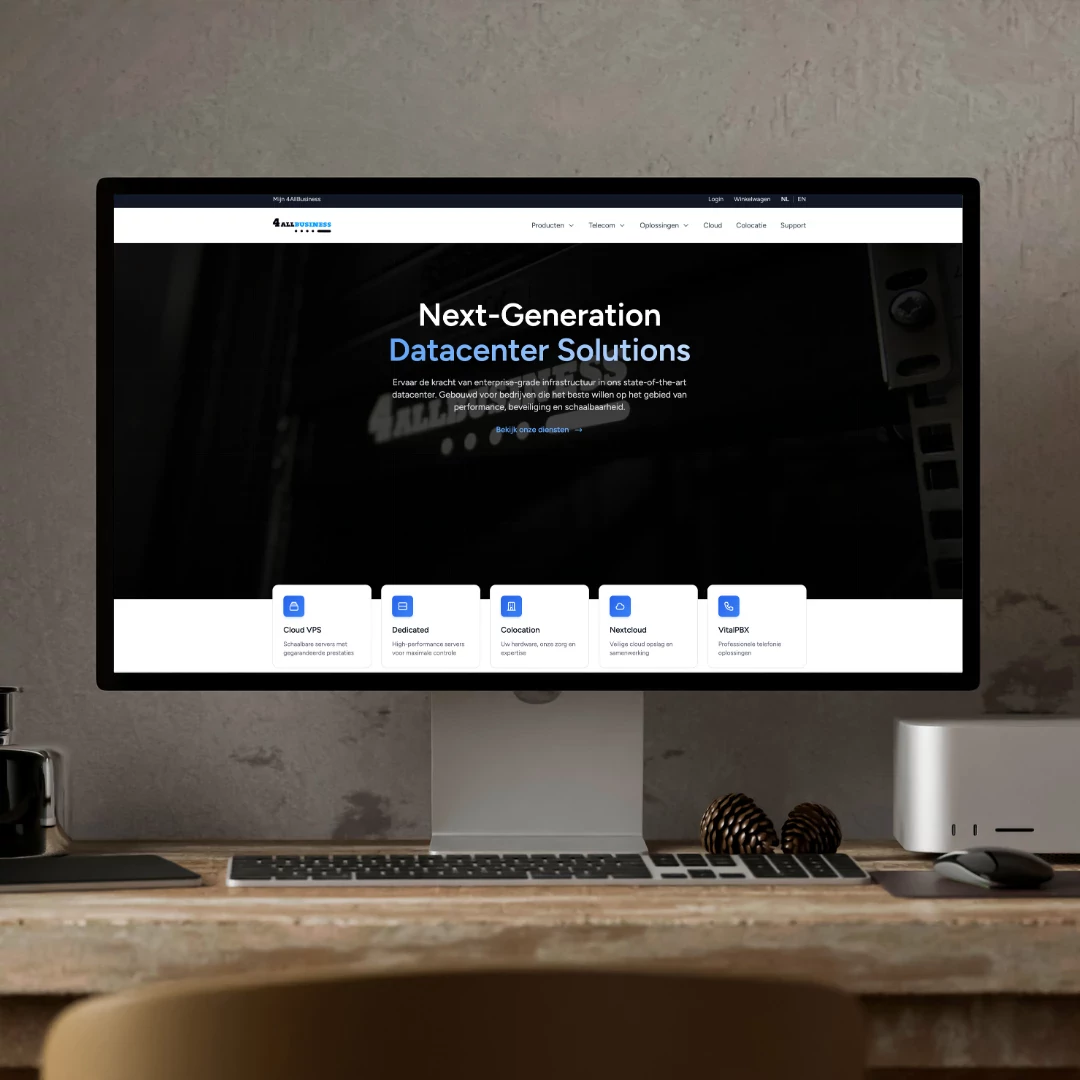 De vernieuwde site met een configurator waarin klanten hun eigen pakket samenstellen en meteen bestellen.
Bestellingen die binnenkomen zoals de klant ze zelf heeft samengesteld, klaar om te verwerken.
De vernieuwde site met een configurator waarin klanten hun eigen pakket samenstellen en meteen bestellen.
Bestellingen die binnenkomen zoals de klant ze zelf heeft samengesteld, klaar om te verwerken.
-
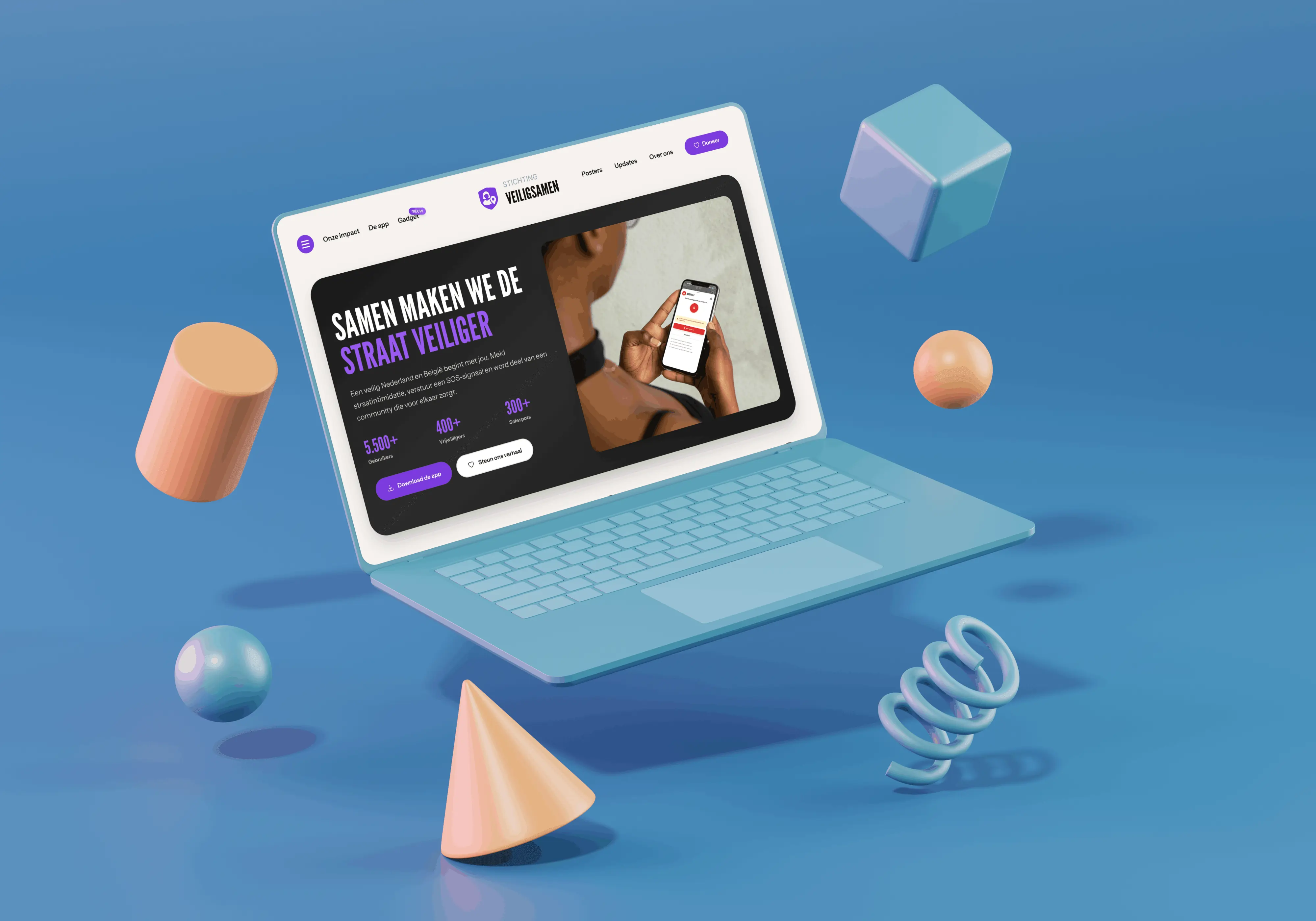 De app en de API waarmee een SOS binnen seconden bij vrijwilligers in de buurt ligt.
Een SOS die binnen seconden op de telefoon staat van vrijwilligers een paar straten verderop.
De app en de API waarmee een SOS binnen seconden bij vrijwilligers in de buurt ligt.
Een SOS die binnen seconden op de telefoon staat van vrijwilligers een paar straten verderop.
-
 De app die hun magazijnsysteem en Shopify aan elkaar knoopt, te installeren vanuit de App Store.
Voorraad die in het magazijn afgaat en op hetzelfde moment in de webshop klopt.
De app die hun magazijnsysteem en Shopify aan elkaar knoopt, te installeren vanuit de App Store.
Voorraad die in het magazijn afgaat en op hetzelfde moment in de webshop klopt.
Helped us extremely fast and understood right away what was needed. I know who I am calling next time.
Questions about connecting systems.
Not answered here? Just ask. You get someone who builds these connections themselves.
Ask your questionOur system has no API. Is it still possible?
Almost always. Then we look for another way in: straight onto the database, a folder where exports land, or a file the system writes out every night. Less pretty than a real API, but from where you sit the only difference is that it works.
What does a connection cost?
A straightforward connection between two systems that both have a decent API is a matter of weeks. Add an old system, or a lot of exceptions, and it climbs. After the first call you hear a figure per flow, so you can start with the connection that returns the most.
How long does it take?
The first working flow is usually there within two to four weeks. A complete project with several directions and systems runs closer to two or three months. You do not have to wait for everything before the first piece of work is off your plate.
What if our supplier changes their API?
Then we hear about it, because the connection reports itself the moment something stops adding up. Small changes we absorb within the maintenance. If a supplier throws out their whole API, that is a separate job and we say what it costs beforehand.
Does it run at your end or ours?
Whichever you prefer. Usually the connection runs on our servers in the Netherlands, because then we can watch it. If you want it in your own environment, we put it there and write down how you manage it.
What happens to data that does not get through?
It stays put rather than disappearing. A failed message is retried automatically, and if it stays stuck you see it in the log and we get an alert. Nothing quietly falls on the floor.
Can you connect to something we built ourselves?
Yes, and that is often easier than a closed package. We read your code, or we build an API on top of it so you can hang other things off it later as well.
Who owns the connection?
You do. The code, the keys and the servers are in your name. If you continue with another party later, you hand it over without anything staying behind with us.