
An app that also works in a customer's basement.
For the engineer in the van, the driver on the route and the picker in the warehouse. Signing off job sheets, taking photos, scanning, logging hours. That rarely happens somewhere with four bars of signal.
So we build every app to keep working offline. Whatever has been entered stays put and travels along by itself the moment there is a connection again.
- Job sheet 2481
- Photos (3)
- Signature
Everything sits locally on the device. As soon as there is signal it travels along by itself, without anyone pressing a button.
What these apps are for.
Almost never for an app store full of strangers. Almost always for a group of people who have to work in it every day.
-
Field service and installation
Job sheets, checklists, photos of the situation and a signature from the customer. The planning comes in, the finished work goes back, and the invoice can go out the same day.
-
Warehouse and logistics
Scanning on receipt, picking orders, loading and unloading. Also on a handheld scanner running Android, because those are usually already there and you do not simply replace them.
-
An app for your customers
Ordering, following the status, pulling documents. Worth it if people are in there often. If not, we say so and would rather build something in the browser.
-
On top of what you already have
The app is almost never the whole story. Usually it hangs off your ERP, your planning or the platform already standing, and we build or connect that part as well.
Most companies do not need an app.
An odd sentence on this page, but it holds more often than you would think. So before we start, we hold it up against your situation.
-
When an app wins
When people are in it daily, when the work happens outside where the signal drops, or when you need the camera, the scanner or the location of the device. Then an app is not a luxury but the difference between working and waiting.
-
When the browser wins
When people look in now and then, when it is mostly reading and filling in, or when it has to work on a laptop too. Then we build something that runs in the browser: no install, no app store, and a lot cheaper to maintain.
-
Often it turns out to be both
The office in the browser, the field team in the app, both on the same data. That is usually the cheapest outcome and rarely the first proposal anyone gets.
From first sketch to the phone in your pocket.
We build once for iOS and Android at the same time. That halves the build and saves again every year in maintenance.
Book a call-
We ride along for a day
Into the van, onto the warehouse floor. What does someone do on paper now, where do they stand with gloves on, and at what point does the signal drop. That is where the screen design comes from, not from a meeting room.
-
A working version on real devices
Not pictures but an app you can install on the phones you already have. Two or three people take it out and tell us what is wrong with it.
-
Into the app store
Apple rejected close to a quarter of all submissions last year. We handle the submission, the texts and the privacy statement so that does not become your problem. Internal apps can also skip the store entirely.
-
Keeping up with iOS and Android
Both release a new version every year, and sometimes it breaks something. We absorb that in the maintenance, before someone is standing there with a phone that no longer works.
Apps that go along every single day.
Built for the people who have to take them out on the road, not for a screenshot.
All cases-
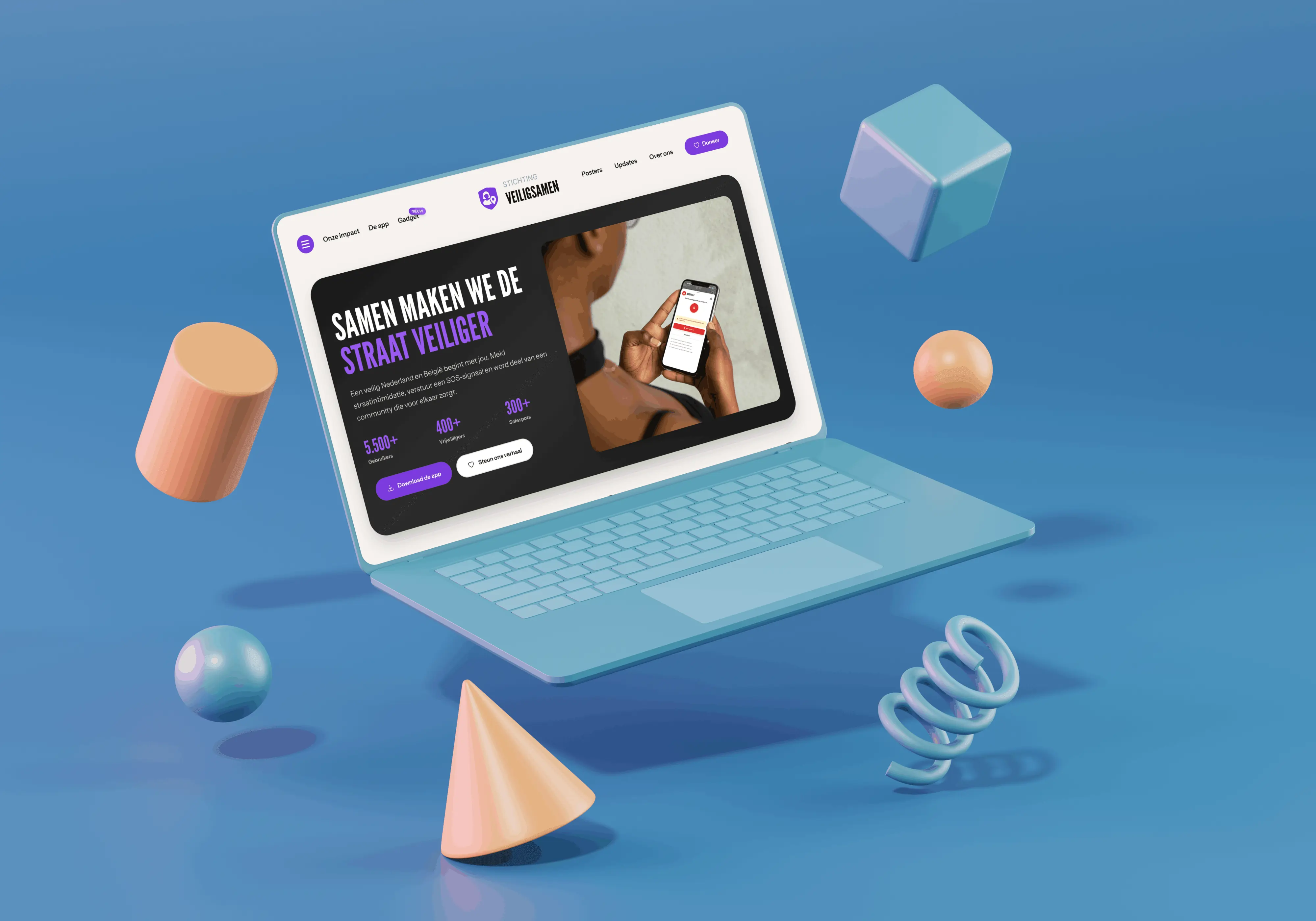 De app en de API waarmee een SOS binnen seconden bij vrijwilligers in de buurt ligt.
Een SOS die binnen seconden op de telefoon staat van vrijwilligers een paar straten verderop.
De app en de API waarmee een SOS binnen seconden bij vrijwilligers in de buurt ligt.
Een SOS die binnen seconden op de telefoon staat van vrijwilligers een paar straten verderop.
-
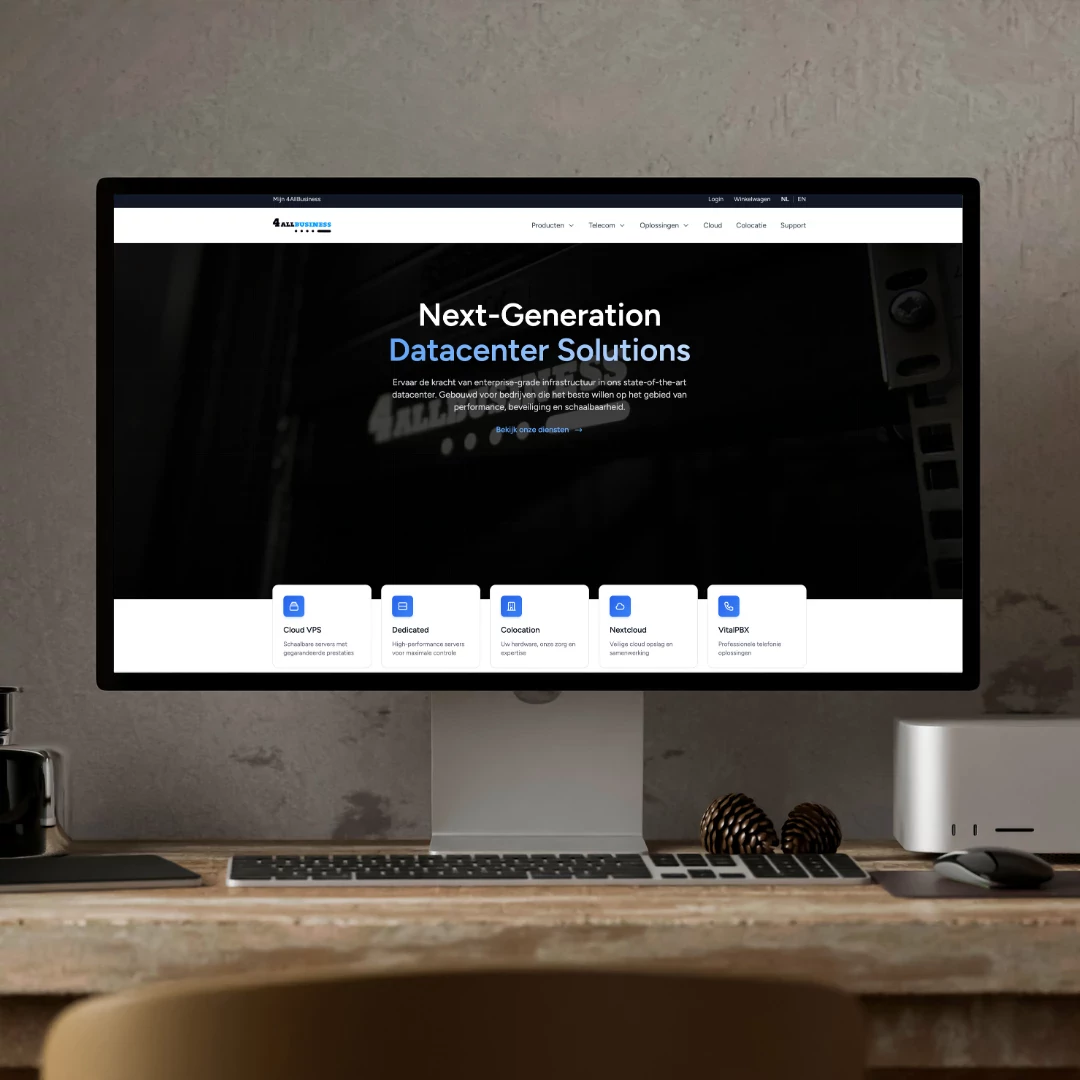 De vernieuwde site met een configurator waarin klanten hun eigen pakket samenstellen en meteen bestellen.
Bestellingen die binnenkomen zoals de klant ze zelf heeft samengesteld, klaar om te verwerken.
De vernieuwde site met een configurator waarin klanten hun eigen pakket samenstellen en meteen bestellen.
Bestellingen die binnenkomen zoals de klant ze zelf heeft samengesteld, klaar om te verwerken.
-
 De app die hun magazijnsysteem en Shopify aan elkaar knoopt, te installeren vanuit de App Store.
Voorraad die in het magazijn afgaat en op hetzelfde moment in de webshop klopt.
De app die hun magazijnsysteem en Shopify aan elkaar knoopt, te installeren vanuit de App Store.
Voorraad die in het magazijn afgaat en op hetzelfde moment in de webshop klopt.
Helped us extremely fast and understood right away what was needed. I know who I am calling next time.
Do you build separately for iOS and Android?
No, we build once for both. That saves roughly half the build cost and saves again every year in maintenance, because there is only one version to keep up. If you need something that pushes the device to its limits, we say so and look at a separate approach.
What does an app cost?
A first usable version for one clear task is a matter of weeks. An app that hangs off your ERP, has to work offline and is used by dozens of people climbs from there. After the first call you get a figure per part, so you can start with the piece that saves the most.
What does it cost per year after that?
Count on fifteen to twenty per cent of the build cost per year. That is not a sales line but the reality of two operating systems that change every year. Updates, security and small improvements are in there. We would rather say it up front than have you find out after a year.
Does the app really work without internet?
Yes. Whatever someone enters is kept on the device and travels along by itself once there is a connection again. We also handle two people changing the same thing at once, because that is exactly where apps like this normally fall over.
Does it have to be in the app store?
For an app only your own people use, no. We can put it straight on the devices or through the management system you already use. If it is for customers, it has to pass review and we handle that.
Will it work on our scanners?
Usually. Plenty of handheld scanners in warehouses simply run Android, so we can build on that. The scan button on the device keeps working, so nobody has to use the camera.
Who owns the app?
You do. The code, the app store accounts and the keys are in your name. If you continue with another party later, you hand it over and nothing stays behind with us.
Can the app hang off our existing system?
That is almost always the intention. The app is the screen, the data comes from somewhere else. If a connection exists, we use it. If not, we build it.