
Work nobody misses once it is gone.
Invoices typed in by hand. A list exported from one system every Monday and pasted into another. A report someone puts together on a Friday afternoon. It never appears on an invoice, but it costs you hours every week.
We take that work out. Not by putting a robot in front of it that clicks buttons, but by letting the systems themselves do what someone now does by hand.
Where the hours quietly disappear to.
They are rarely big jobs. They are small actions that come back hundreds of times a month and that nobody notices any more.
-
Booking invoices
One to four minutes per invoice, and that is when nothing unusual is going on. At a few hundred a month that is half a working week. Get them in twenty different layouts and it climbs further.
-
Retyping between systems
Someone pulls data out of one screen and types it into another. Not because they have to, but because the two systems were never tied together and someone once started doing it.
-
The Friday afternoon report
Export, paste, update formulas, send. The same every week, and when that person is on holiday there is no report.
-
Combing through mailboxes
Orders, requests and packing slips arriving as attachments that someone opens to enter somewhere else. At the weekend too, otherwise Monday is unmanageable.
A robot clicking buttons is a sticking plaster.
You can have software imitate a person: open screens, fill in fields, click send. That works, right up until someone moves a button. So we nearly always take the route underneath.
-
What we would rather do
Have the systems talk to each other directly, underneath the screens. Nothing has to be opened or filled in any more, it runs a hundred times faster, and it does not break when a menu shifts or a button is renamed. It also keeps running at night without a computer having to stay switched on.
-
Where a click robot falls over
It does exactly what it was taught, even when the screen changes. Then it happily clicks on, fills the wrong field and reports nothing. You usually find out weeks later, when the numbers stop adding up. That costs more than the manual work you set out to save.
-
When a plaster is fine
Sometimes a system genuinely has no way in: no interface, no database you can reach, no export. If it is being replaced within a year anyway, we build that stopgap. We just add that it is temporary and what it costs to do it properly later, rather than selling it as the end state.
-
What we will not do
Push a licence for a platform you pay for year after year when a one-off build sits underneath it. Counted over three years that is almost always more expensive, and you are tied to a supplier for something that should have been yours. We would rather build it once, in your name.
How we take it out.
Done well, automation saves twenty to forty per cent of the time spent on routine tasks. You only get there if you measure first and build second.
Book a call-
Count how often and how long
We visit the people doing it and put numbers next to it: how often a week, how many minutes a time, how often it goes wrong. That shows immediately which action returns the most and which one to leave alone.
-
One task out
We start with the action that scores highest and measure what it actually saves. If it returns less than expected, you have spent a few weeks and now we know.
-
Run it alongside the manual work
For a while the software does it and the person does it too. If the outcomes match, the manual work goes. If not, nothing broke except our assumption.
-
The next one
Automation is rarely finished in one go. Every few weeks another action falls away, and after six months the Friday report is something nobody thinks about.
Work we took away.
Actions that now run by themselves, at companies where someone used to do them every week.
All cases-
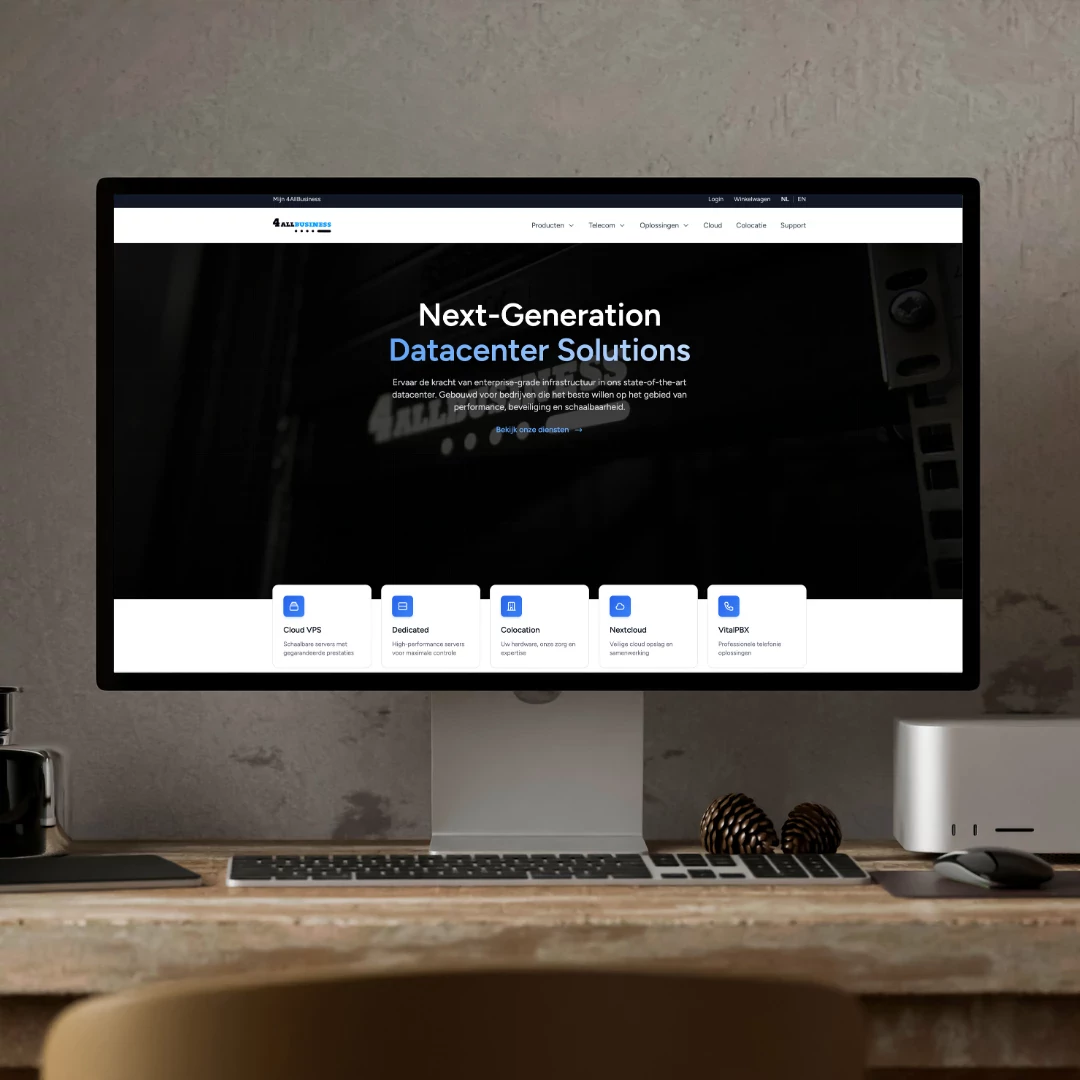 De vernieuwde site met een configurator waarin klanten hun eigen pakket samenstellen en meteen bestellen.
Bestellingen die binnenkomen zoals de klant ze zelf heeft samengesteld, klaar om te verwerken.
De vernieuwde site met een configurator waarin klanten hun eigen pakket samenstellen en meteen bestellen.
Bestellingen die binnenkomen zoals de klant ze zelf heeft samengesteld, klaar om te verwerken.
-
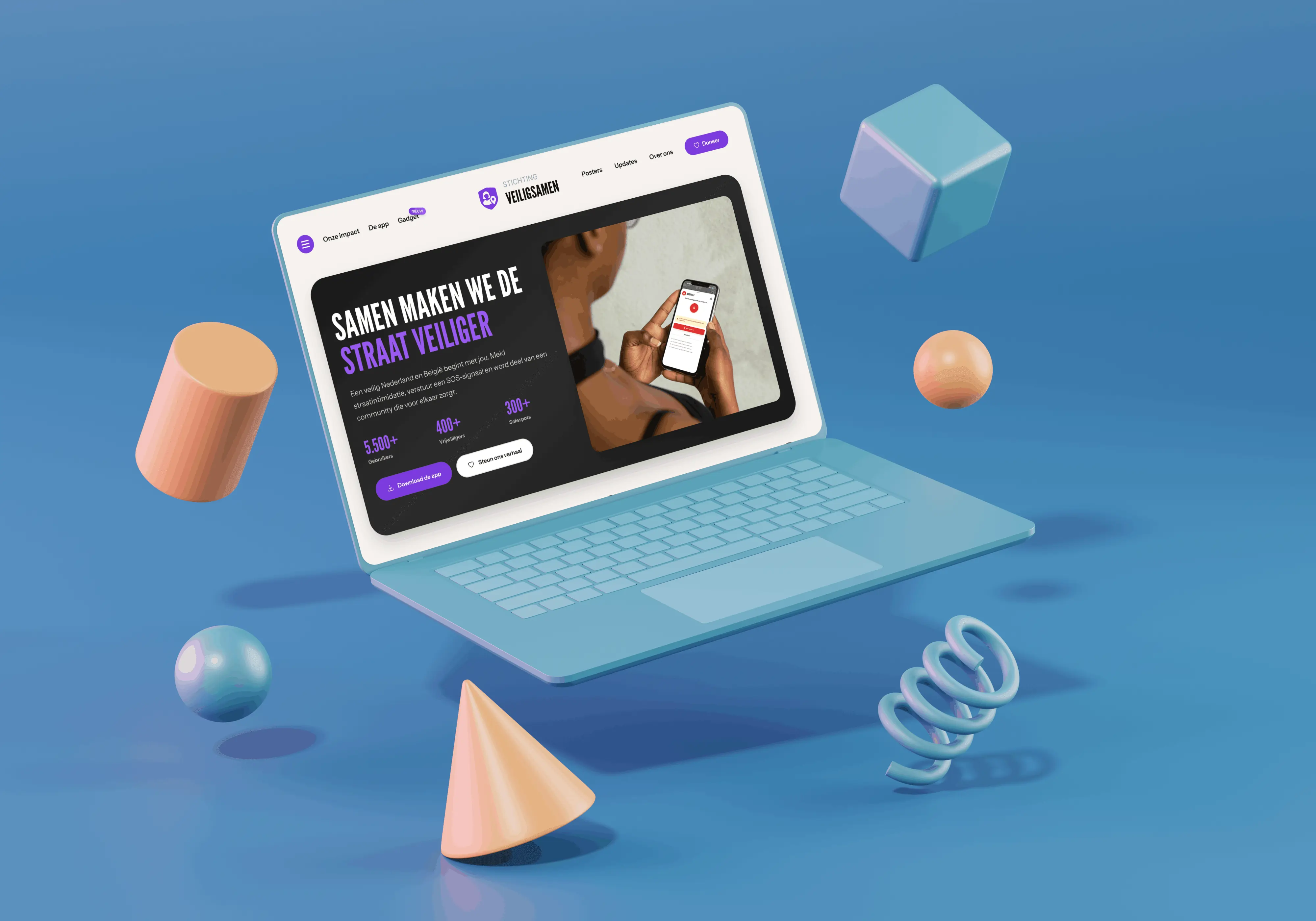 De app en de API waarmee een SOS binnen seconden bij vrijwilligers in de buurt ligt.
Een SOS die binnen seconden op de telefoon staat van vrijwilligers een paar straten verderop.
De app en de API waarmee een SOS binnen seconden bij vrijwilligers in de buurt ligt.
Een SOS die binnen seconden op de telefoon staat van vrijwilligers een paar straten verderop.
-
 De app die hun magazijnsysteem en Shopify aan elkaar knoopt, te installeren vanuit de App Store.
Voorraad die in het magazijn afgaat en op hetzelfde moment in de webshop klopt.
De app die hun magazijnsysteem en Shopify aan elkaar knoopt, te installeren vanuit de App Store.
Voorraad die in het magazijn afgaat en op hetzelfde moment in de webshop klopt.
Helped us extremely fast and understood right away what was needed. I know who I am calling next time.
Questions about automating.
Not answered here? Just ask. You get someone who runs these projects themselves.
Ask your questionWill people lose their jobs over this?
In practice we rarely see it. What disappears is the dullest part of someone's day: retyping, exporting, pasting. What remains is the work they were hired for. At growing companies it usually means no extra pair of hands is needed.
What does it cost?
A first automation on existing systems is a matter of weeks at most companies. What it comes to depends on how many systems are involved. We work out beforehand what the action costs you per year, so you can see whether it is worth it.
How quickly is it paid back?
For actions that recur daily, often within the year. We calculate it up front with your own numbers: times a week, minutes a time, hourly rate. If that does not produce a decent figure, we advise against it.
Does our system have to be replaced for this?
No. In most cases we leave what stands and build beside it. If it turns out the system itself is the problem, we say so, but we do not use it as an excuse to sell a whole new project.
If something goes wrong, will we notice?
Yes. Everything we automate keeps a record of what it did and reports itself when something fails. An invoice that cannot be processed stays put with the reason attached, rather than vanishing so you find out a month later.
Can you use AI to read documents?
We can, and for invoices in twenty different layouts it is often the only workable route. We only use it where it genuinely beats a fixed rule, and we build a check around it. An amount that looks odd ends up with a person rather than in the accounts.
How long before something works?
The first action usually runs alongside real work within four to six weeks. That is deliberately short: you want to know whether it delivers what we calculated before you put more into it.
Who owns what you build?
You do. Not a monthly licence for a robot you rent, but code in your name that you can take with you. What we do afterwards is maintain it, not lease it.